FirstRig
firstrig.com

Corrections

Errors we found, and what we changed

Every data error found and fixed since the first commit, newest first. Most were ours. Some were in a manufacturer’s own material and would have become ours if we had copied them. Each record gives what was published or assumed, what we found, what changed and the source that settled it. The date is the day the fix went in.

30 corrections since 16 August 2026: 16 were on the site, 11 were caught before publication, 3 were errors in a maker’s material

Index

Every correction, newest first
IdDateCorrectionStatus
C-3012 OctThe method page's exposure example kept the old read noiseWas on the site
C-2912 OctThe Quattro 150P's corrector is in the boxWas on the site
C-2812 OctA reducer named for a factor its maker never printedWas on the site
C-2712 OctReducers did not change the focal lengthWas on the site
C-2612 OctCameras with a guide sensor were sold a guide cameraWas on the site
C-2512 OctTen mono cameras were priced as colorWas on the site
C-2412 OctA tube holder matched on a retailer's titleCaught before publication
C-2312 OctTwo Celestron reducers were given the wrong output threadWas on the site
C-2210 OctThe Bortle 2 preset sat in class 1Was on the site
C-2110 OctThe home page promised a resale estimateWas on the site
C-206 OctThe observatory guide described the design as the buildWas on the site
C-1928 SepAn SSD priced at an out-of-stock sale priceCaught before publication
C-1828 SepFigures in the prototype that had no sourceCaught before publication
C-1727 SepA false “don't buy” at $3,000Was on the site
C-1627 SepMounts priced without the tripod they ship withWas on the site
C-1527 SepSky-Watcher USA's EDX specs repeat the discontinued ED lineError in a maker's material
C-1427 SepA pound-to-kilogram conversion on the HEQ5-R Pro pageError in a maker's material
C-1327 SepThree EdgeHD reducers in one row, and a solar filter's part numberWas on the site
C-1227 SepThe natural sky was a textbook minimumWas on the site
C-1127 SepWorked examples that did not reproduceCaught before publication
C-1026 SepThe observatory draft disagreed with its own specCaught before publication
C-0926 SepSatellite data stored at ten times its scaleCaught before publication
C-0826 SepA spacer in front of the off-axis guiderWas on the site
C-0726 SepA focus range stored as a targetWas on the site
C-0625 SepZWO's 55 mm charts do not add upError in a maker's material
C-0524 SepThe solver chose your thread adapterCaught before publication
C-0424 SepSpacer kits were lists of lengthsCaught before publication
C-0326 AugZWO's 17.5 mm means two different thingsCaught before publication
C-0216 AugTwo forms of the Dawes limit presented as oneCaught before publication
C-0116 AugThe critical focus zone shorthand was for another wavelengthCaught before publication

C-30Was on the site

The method page's exposure example kept the old read noise

Published or assumed
The worked example on the method page ran on 1.0 e⁻ of read noise, described as the physics reference's round figure.
What we found
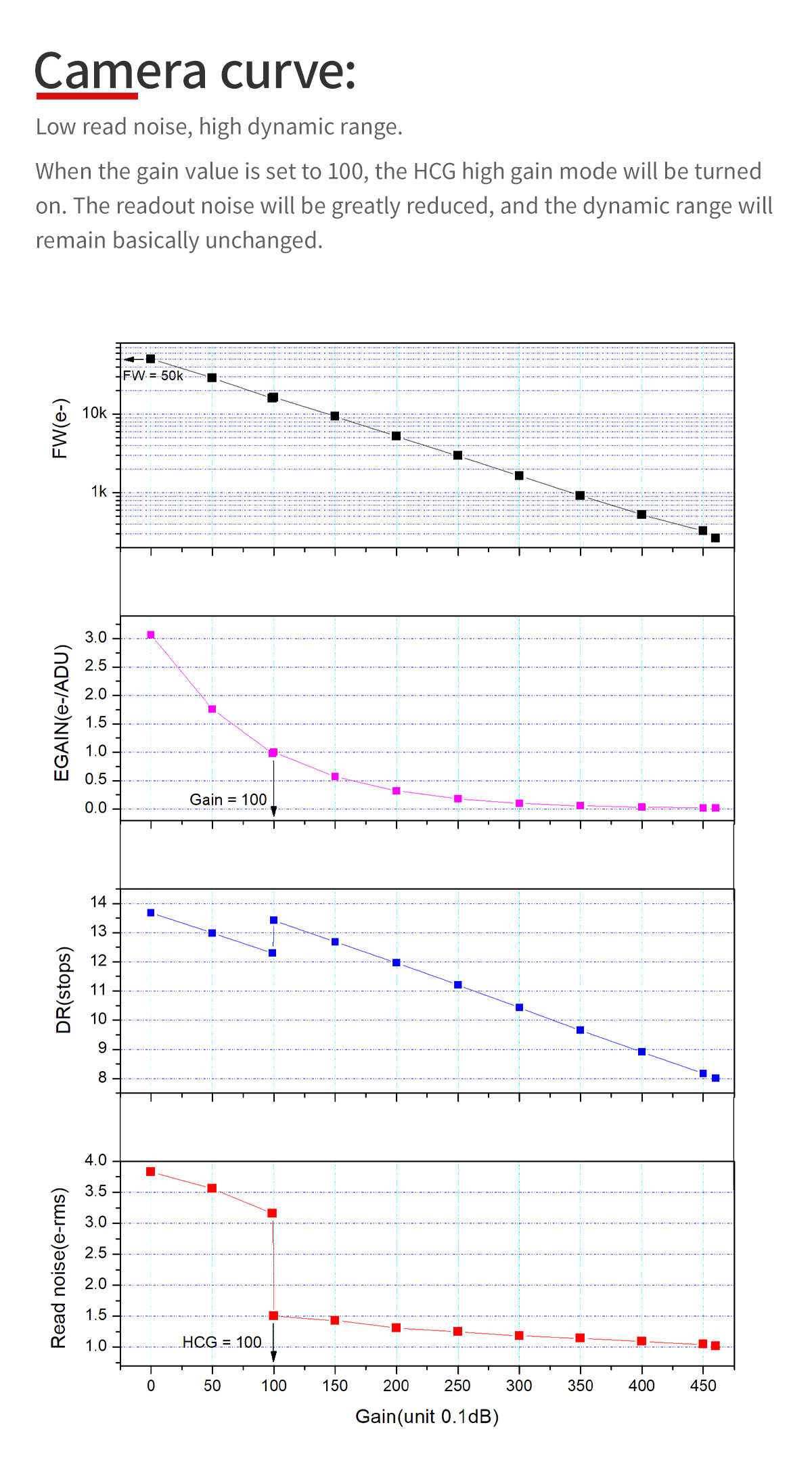
On 27 September the reference moved that example to the 1.5 e⁻ ZWO's chart gives for the ASI533 at gain 100 (C-11). The page kept 1.0, so its table matched neither the reference nor what the Exposure Planner computes for the same rig.
What changed
The table now runs at 1.5 e⁻: the shortest sub without a filter is 8.1 s, where it showed 3.6 s, and 147.6 s with the dual-band filter, where it showed 65.6 s. The section carries a dated note.
Settled by
ZWO's read-noise chart for the ASI533 Pro
Page
firstrig.com/method#exposure

C-29Was on the site

The Quattro 150P's corrector is in the box

Published or assumed
The Sky-Watcher Quattro 150P linked no corrector, so its builds in the Rig Reality Check carried an unpriced corrector line.
What we found
Sky-Watcher ships it with “an included coma corrector/reducer” and gives the imaging focal length with it fitted as 518 mm.
What changed
Its builds list the corrector as included, at no extra cost, and are computed at 518 mm. The corrector still counts toward spacing and complexity.
Settled by
Sky-Watcher USA, Quattro 150P
Page
firstrig.com/tools/rig-reality-check

C-28Was on the site

A reducer named for a factor its maker never printed

Published or assumed
The Sky-Watcher reducer for the Evostar 72EDX was listed as a 0.85x reducer.
What we found
Sky-Watcher prints no factor for it: the 72EDX manual gives two back-focus figures and an image height. The 0.85x belongs to the reducer for the discontinued 72ED.
What changed
The row is named “factor not published”, and no reduction is applied to builds that use it.
Settled by
Sky-Watcher Evostar 72EDX manual
Page
firstrig.com/tools/backfocus

C-27Was on the site

Reducers did not change the focal length

Published or assumed
A build with a reducing corrector counted the corrector's price, but was shown and computed at the telescope's native focal length.
What we found
A 0.8x reducer such as William Optics' FLAT 6AIII changes the image scale, the field and the framing. The native figure overstated the focal length by 25%.
What changed
25 corrector rows carry the reduction factor their maker states. Builds are computed at the reduced focal length, and the card shows both figures.
Settled by
William Optics, FLAT 6AIII: “The reducing factor is 0.8X.”
Page
firstrig.com/tools/rig-reality-check

C-26Was on the site

Cameras with a guide sensor were sold a guide camera

Published or assumed
Builds with ZWO's ASI2600 DUO cameras were given a separate guide camera and guide scope, and builds with the Air cameras a control computer as well.
What we found
The DUO has a guide sensor in the camera body; ZWO: “You don't need a separate OAG and guide camera.” The Air cameras carry a guide sensor and an ASIAIR.
What changed
Those builds list built-in guiding, and for the Air cameras a built-in ASIAIR, as included lines with no guiding mass. ZWO lists four USB ports on the Air cameras for the focuser, filter wheel and mount, so no hub is added either.
Settled by
ZWO, ASI2600MC Duo
Page
firstrig.com/tools/rig-reality-check

C-25Was on the site

Ten mono cameras were priced as color

Published or assumed
The Rig Reality Check read mono or color only from the Exposure Planner's sensor profiles, and treated a camera without a profile as color.
What we found
Ten mono cameras fell through and were priced with a dual-band filter instead of a filter wheel and a narrowband set: the ASI2600MM DUO, the QHY268M, both QHY600M rows, ToupTek's ATR2600M, ATR533M and ATR585M, and the SkyEye26AM plus, 62AM and 62AM plus.
What changed
Each camera row carries its maker's own statement of mono or color, with the quote and the page. A camera with neither a statement nor a profile is shown as “sensor type not catalogued”, and no filter option is priced for it.
Settled by
Each maker's page or manual, quoted in the row; catalogue sourcing notes
Page
firstrig.com/tools/rig-reality-check

C-24Caught before publication

A tube holder matched on a retailer's title

Published or assumed
The first pass at ring sets matched the Takahashi FC-76DCU to a holder sold as TKA20420, on the strength of a retailer's product title.
What we found
Takahashi Europe lists TKA20420 as the 80S, for the FS-60CB only. The FC-76DC takes the 80QS, TKA20420Q.
What changed
The ring row is the 80QS, priced at $167, with Takahashi Europe's page as its stated fit.
Settled by
Takahashi Europe, tube holder for the FC-76DC and FS-60Q
Page
firstrig.com/tools/rig-reality-check

C-23Was on the site

Two Celestron reducers were given the wrong output thread

Published or assumed
Celestron's f/6.3 reducer (#94175) and its EdgeHD 8 reducer were catalogued with an M42 output thread, assumed from the usual T-adapter.
What we found
Celestron's knowledge base gives the SCT rear-cell accessory thread as 2″ × 24, and both reducers' sheets thread the visual back or T-adapter straight onto the reducer's rear, so they exit on that thread.
What changed
Both rows exit on the SCT 2″ × 24 thread. Celestron publishes no optical length for its T-adapters, so the Backfocus Solver reports trains through these reducers as blocked until a length is published.
Settled by
Celestron knowledge base, SCT visual back thread
Page
firstrig.com/tools/backfocus

C-22Was on the site

The Bortle 2 preset sat in class 1

Published or assumed
Choosing Bortle 2 in the Exposure Planner or the Rig Reality Check ran the tools on a sky of 21.9 mag/arcsec².
What we found
21.9 is the lower bound of class 1 in the same table, so a Bortle 2 choice was computed as a class 1 sky.
What changed
Class 2 uses 21.75, the middle of its range. The bounds did not change, and a test now checks that every class's value falls inside its own class.
Settled by
The Bortle table on the sky brightness method page
Page
firstrig.com/tools/exposure

C-21Was on the site

The home page promised a resale estimate

Published or assumed
The second of the three commitments on the home page said every build carries a resale estimate.
What we found
No build carries one. There is no data source for resale prices yet, and every build card says “not yet estimated”.
What changed
The commitment now says every build states what it cannot do and says when a figure is missing. Resale estimates will be added when there is a source for them.
Settled by
The Rig Reality Check's own build cards
Page
firstrig.com

C-20Was on the site

The observatory guide described the design as the build

Published or assumed
The build guide, published on 26 September, described the plan: a 2×10 skirt with a fascia, gray electrical conduit for both cable runs, deck blocks at 2.16 lb, and a photo of the finished deck in the slot for the decking going down.
What we found
As built, the rim is 2×8 with the front face wrapped in a deck board and no fascia. The runs are white plumbing PVC carrying only Ethernet and 12 V DC. The blocks are 2.2 lb by the box, and the pier top is 28⅞″ above the deck, ¾″ under the design.
What changed
Each chapter keeps the design and adds what was built. The photo slot shows the first boards going down, and the conduit section says when listed electrical conduit is required.
Settled by
The builder's measurements of the finished observatory, 6 October 2026
Page
firstrig.com/observatory

C-19Caught before publication

An SSD priced at an out-of-stock sale price

Published or assumed
The first pass at essential prices put the storage line at Samsung's own $479.99 for the T7 2TB.
What we found
That was a sale price on an item Samsung showed as out of stock, on both 27 and 28 September.
What changed
The row is priced at Newegg's own in-stock offer, $399.99, sold and shipped by Newegg. It remains the least stable price in the set and is among the first rows due a check by hand.
Settled by
Newegg, Samsung T7 2TB
Page
firstrig.com/tools/rig-reality-check

C-18Caught before publication

Figures in the prototype that had no source

Published or assumed
The prototype the Rig Reality Check was built from showed “$1,670 you haven't thought of yet” for accessories, guided RMS figures, and clear-night presets labeled by region (“40, typical temperate”).
What we found
The accessory prices and the RMS figures were invented, and the regional labels had no source. No mount maker publishes a guided RMS.
What changed
Accessories are priced from 30 sourced rows. Clear nights are your own number. The tool states the guided RMS each build needs, and scores guiding only when you enter your own figure.
Settled by
Dated retailer and maker listings for every essential; catalogue sourcing notes
Page
firstrig.com/tools/rig-reality-check

C-17Was on the site

A false “don't buy” at $3,000

Published or assumed
The unlisted draft of the Rig Reality Check told a $3,000 buyer that nothing modular fits.
What we found
No camera or corrector in the catalogue carried a price yet, so no build could be fully priced. A missing figure was being presented as advice not to buy.
What changed
28 cameras and 17 correctors were priced. When nothing ranks only because prices are missing, the tool says the catalogue is incomplete, and offers neither a smart telescope nor “you need more budget”.
Settled by
The tool's rule that a missing figure is counted and named, never estimated
Page
firstrig.com/tools/rig-reality-check

C-16Was on the site

Mounts priced without the tripod they ship with

Published or assumed
The mount catalogue's first pass put head-only prices on the rows for packages that include a tripod: the CEM40, CEM26, GEM28, Star Adventurer GTi and CQ350.
What we found
The engine adds a tripod line only when a mount ships without one, so the unlisted draft of the Rig Reality Check priced those builds with no tripod at all.
What changed
One row is one package: its tripod, its counterweight and every price on it describe the same thing, and a test fails when a price's contents contradict the row.
Settled by
Each maker's own store listing; catalogue sourcing notes
Page
firstrig.com/tools/rig-reality-check

C-15Error in a maker's material

Sky-Watcher USA's EDX specs repeat the discontinued ED line

Published or assumed
Sky-Watcher USA's spec tables for the Evostar and Esprit EDX refractors.
What we found
Their weights (7.3 lb, 8.4 lb) and flattener figures (63/40 mm, 66/33 mm) match the old ED manuals exactly. The Evostar 100EDX is 700 mm f/7, where the 100ED was 900 mm f/9, and the current Esprits ship without a flattener.
What changed
The EDX rows come from Sky-Watcher's global pages and the EDX manuals, and no EDX row links a corrector made for the old ED scopes.
Settled by
Sky-Watcher Esprit 100EDX manual
Page
firstrig.com/tools/rig-reality-check

C-14Error in a maker's material

A pound-to-kilogram conversion on the HEQ5-R Pro page

Published or assumed
Sky-Watcher USA's HEQ5-R Pro spec page gives the payload as “33 pounds (9.97kg)”, and its prose says 30 pounds.
What we found
33 lb is 14.97 kg, and the page's two US figures disagree with each other. Sky-Watcher's global page and the manual both say 15 kg.
What changed
The row is keyed at 15 kg from the manual. Where Sky-Watcher's US spec data disagrees with a manual or the global page, the manual wins; the same data prints an EQ8-R head weight with an inch mark.
Settled by
Sky-Watcher HEQ5-R Pro manual
Page
firstrig.com/tools/rig-reality-check

C-13Was on the site

Three EdgeHD reducers in one row, and a solar filter's part number

Published or assumed
One Backfocus Solver row covered Celestron's 0.7x reducers for the EdgeHD 9.25, 11 and 14, listed as #94243, #94241 and #94240.
What we found
They are three products. The 9.25's is #94245, a 4-element design; the 11 and 14 take 5-element reducers. #94243 is Celestron's EclipSmart solar filter for 6″ SCTs.
What changed
Three rows, each from its own instruction sheet, each at 146 mm, with its own price.
Settled by
Celestron, 0.7x reducer for the EdgeHD 9.25Celestron, EclipSmart solar filter for 6″ SCTs
Page
firstrig.com/tools/backfocus

C-12Was on the site

The natural sky was a textbook minimum

Published or assumed
The sky-brightness model, published the day before, took the natural zenith sky as 22.0 mag/arcsec².
What we found
22.0 is a minimum: solar minimum, away from the Milky Way and the zodiacal light. The National Park Service's measured median over 295 nights, with the artificial light removed, is 21.83. Against the NPS total-sky measurements the model read 0.15 mag too dark on average.
What changed
The natural sky is 21.83, the kernel was re-fitted for it, and the bias fell to +0.02. The model can no longer return Bortle 1, and the method page says to read its darkest answer as Bortle 2 or better.
Settled by
NPS Night Skies Program measurements
Page
firstrig.com/method/sky-brightness

C-11Caught before publication

Worked examples that did not reproduce

Published or assumed
The physics reference's exposure examples gave read noise as 1.0 e⁻ but quoted a 148 s shortest sub at 7 nm, a nebula rate of 0.258 e⁻/px/s and 18.4 hours to SNR 40.
What we found
Only 1.5 e⁻ gives 148 s, and ZWO's chart puts the ASI533 at about 1.5 e⁻ at gain 100 with HCG on. The reference's own formula gives the nebula rate as 0.270, and the closed form gives about 18.5 hours.
What changed
The examples use 1.5 e⁻ throughout: 8.1 s without a filter and 147 s at 7 nm. Three pending tests built on them now run.
Settled by
ZWO's read-noise chart for the ASI533 Pro
Page
firstrig.com/method#exposure

C-10Caught before publication

The observatory draft disagreed with its own spec

Published or assumed
The observatory guide's draft gave a 10″ pier in two chapters and about 100 lb for the dome, and the spec put the deck surface 12¼″ above grade.
What we found
The spec has a 12″ pier and a 250 lb dome, and its own joist height plus 1″ decking puts the deck surface at 11¾″.
What changed
The prose and the deck height were brought into line with the spec before the guide was published. The spec's derived numbers are recomputed from its inputs in the tests.
Settled by
The build spec the guide's tables render from
Page
firstrig.com/observatory

C-09Caught before publication

Satellite data stored at ten times its scale

Published or assumed
Every year of the mirrored VIIRS night-light files was read as radiance in nW/cm²/sr.
What we found
The mirror stores 2012 to 2021 at ten times that scale and 2022 to 2024 at one. Read as nW, a 2016 file overstates radiance tenfold; it surfaced as a calibration constant that jumped by a factor of 8 between years. The mirror's 2000 to 2011 files are extrapolated.
What changed
The pipeline declares the scale for each year and checks it against the file every time one is opened. The extrapolated years are never used.
Settled by
The files themselves: every lit value from 2012 to 2021 is a multiple of 10OpenLandMap VIIRS mirror, Zenodo record 17294744
Page
firstrig.com/method/sky-brightness

C-08Was on the site

A spacer in front of the off-axis guider

Published or assumed
When a spacer could sit on either side of an off-axis guider with the same back focus, the solver put it on the corrector side.
What we found
That placed ZWO's 21 mm spacer in front of the OAG, the opposite of ZWO's own charts. The guide camera focuses at a fixed distance from the prism, so the length between the OAG and the sensor is set by the OAG's design.
What changed
Among equally good stacks the solver keeps spacing behind the guider, and reports the guider-to-sensor distance.
Settled by
ZWO OAG manualDiffraction Limited, OAG-8300 manual
Page
firstrig.com/tools/backfocus

C-07Was on the site

A focus range stored as a target

Published or assumed
Correctors that focus over a range, such as Askar's FRA400 and FRA500, stored the longest train they take as a target, with the default ±0.5 mm tolerance.
What we found
A maximum cannot be exceeded at all. The solver accepted a train 0.5 mm past a length the scope cannot focus, and asked for spacers the scope did not need.
What changed
A published range is stored as a range, and no train past the maximum is accepted. Where the maker gives only a maximum, the result says how far the focuser racks out, for you to check against your own focuser.
Settled by
ZWO FF65 APO manualAskar FRA400
Page
firstrig.com/tools/backfocus

C-06Error in a maker's material

ZWO's 55 mm charts do not add up

Published or assumed
ZWO's “ASI Camera 55mm Back Focus Solution” charts, the obvious place to copy a total from.
What we found
Page 4 sums to 55 under a “56mm” caption, page 7 draws the camera at 16.5 mm instead of 17.5, and page 17 sums to 56 under a “55mm” caption. The component figures are consistent across the charts. The captions are wrong.
What changed
The catalogue takes each part's own length and sums the parts. No ZWO total is copied.
Settled by
ZWO, ASI Camera 55mm Back Focus Solution (2025)
Page
firstrig.com/tools/backfocus

C-05Caught before publication

The solver chose your thread adapter

Published or assumed
When a corrector's thread and a camera's differed, the solver picked the shortest adapter chain from the whole catalogue.
What we found
The M48 to T2 conversion alone is sold at 0, 1, 3.5, 5.3 and 6 mm of optical length. Picking one assumed you owned it, and a train built on the 6 mm ring would come out 6 mm long.
What changed
The solver never picks an adapter. When your kit cannot join the threads, it asks which ring you have and offers only rings that complete the path.
Settled by
Manufacturer lengths in the adapter catalogue
Page
firstrig.com/tools/backfocus

C-04Caught before publication

Spacer kits were lists of lengths

Published or assumed
Spacer kits were modeled as lengths, solved with unlimited repeats, and thread adapters as a separate step.
What we found
ZWO's own diagrams show the ASI2600 Pro kit as a 0 mm M42 to M48 ring, a 16.5 mm M48 to M42 extender and a 21 mm M42 spacer, so an M48 corrector screws straight onto the extender. The old model sent that owner to buy an adapter they did not need, then could not reach 55 mm. Repeats let the Baader RCC I solve with two of each extender from a box that holds one.
What changed
Every spacer, extender and adapter is one threaded part with an optical length. A kit holds one of each piece, and no ring is used more often than you own it.
Settled by
ZWO ASI2600 manual, connection diagrams
Page
firstrig.com/tools/backfocus

C-03Caught before publication

ZWO's 17.5 mm means two different things

Published or assumed
The catalogue's first design held one back-focus figure per camera.
What we found
ZWO quotes 17.5 mm across its cooled cameras. On the ASI533, ASI585, ASI294, ASI183 and ASI1600 it is a 6.5 mm body plus the 11 mm ring in the box; on the ASI2600, ASI6200 and ASI071 it is the bare body. ZWO's manuals headline the with-ring figure for some models and the bare one for others on identical arrangements. Guessing wrong is an 11 mm error.
What changed
Every camera row states which configuration its figure describes. Where a camera ships in more than one, the solver asks which you have before it answers.
Settled by
ZWO ASI2600 manual: 17.5 + 21 + 16.5 = 55 with the two extenders in the box
Page
firstrig.com/tools/backfocus

C-02Caught before publication

Two forms of the Dawes limit presented as one

Published or assumed
The physics reference gave 116 / D in millimeters and the widely quoted 4.56 / D in inches as the same formula.
What we found
116 / 25.4 is 4.567, so the two forms differ by 0.15%, about 0.0009″ at 200 mm. Found the same way, by unit-testing against the reference.
What changed
The physics package implements the millimeter form only. Any inch form shown on the site is derived from it.
Settled by
Arithmetic: 116 / 25.4 = 4.567
Page
firstrig.com/method

C-01Caught before publication

The critical focus zone shorthand was for another wavelength

Published or assumed
The physics reference gave the critical focus zone as about 2.2 × f² micrometers at 550 nm.
What we found
4.88 × 0.550 is 2.684, so the shorthand at 550 nm is 2.68 × f². The 2.2 coefficient is the 450 nm case and is often quoted without its wavelength. At f/5 that is 67 µm against 55 µm. Found by unit-testing the shipped function against the reference.
What changed
The formula itself was always right. The reference now gives the shorthand as 2.68 × f², and a unit test checks the function against it.
Settled by
Arithmetic: CFZ = 4.88 × λ × f², with λ = 0.550 µm
Page
firstrig.com/method

Reporting an error

A public error tracker is coming.

Last updated